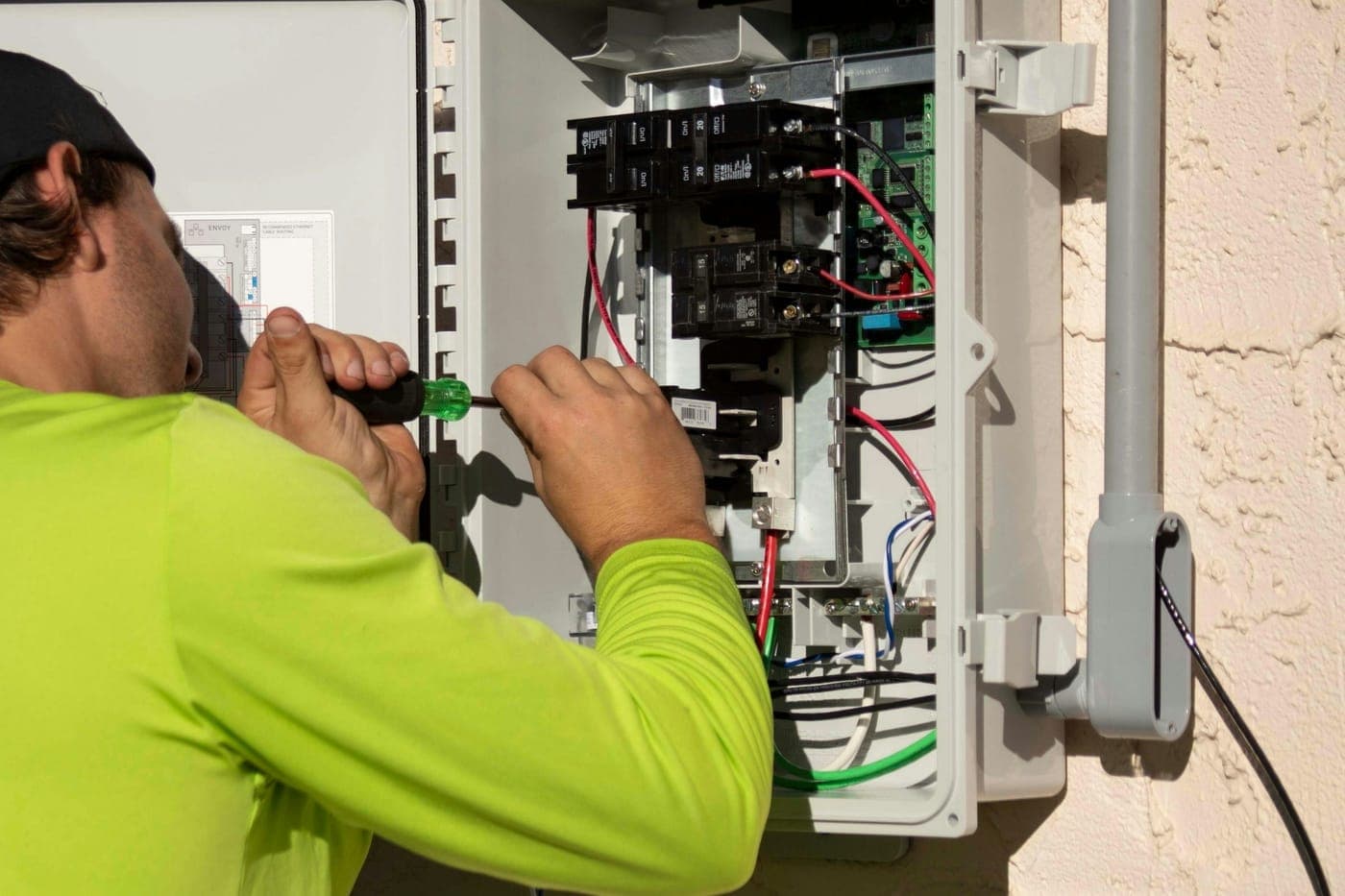
When utility power fails, a standby generator's automatic transfer switch (ATS) starts the generator and transfers the home's electrical load onto it, typically within seconds. Once utility power is restored, the switch seamlessly moves the home back to the grid. The generator itself is a permanent outdoor unit, similar to an air conditioner, that runs on natural gas or liquid propane.
Homeowners usually install standby generators to keep critical systems running, such as sump pumps, well pumps, medical equipment, or home offices. A whole-home system must be precisely sized to the property. Under the electrical code, a generator connected to an automatic switch must have the capacity to carry the full load of everything it feeds, unless a load-management system is installed to temporarily shed high-draw appliances until sufficient power is available.
We specialize in installing the generator and the transfer switch, handling all underlying electrical connections between the hardware and your main panel. The necessary gas piping and fuel supply connections are performed by licensed gas plumbers. Both the electrical and gas portions of the installation typically require municipal permits.
What This Covers
- Whole-home standby generators on natural gas or propane
- Automatic transfer switches (ATS)
- Load calculations to size the generator to the house
- Load management for large appliances
- Power and control wiring between generator, switch and panel
- Adding or replacing a transfer switch on an existing generator
Signs It’s Time to Call
- An outage would stop a sump pump, well pump or medical equipment
- A home office can't lose a day to an outage
- A portable generator has to be wheeled out and refueled every time the power goes
- The house sits empty while you travel
The Process
Add Up What Has to Run
A comprehensive load calculation aggregates the power requirements of your home. This determines the necessary generator capacity and indicates whether high-draw appliances will require a load-management system.
Clearances for the Pad
You select where the generator is placed, within regulatory boundaries. The manufacturer's specifications and local fire codes dictate its proximity to the house, and we ensure it maintains proper clearance—typically at least five feet—from windows, doors, and vents.
Line Up the Gas and the Permits
The natural gas utility or propane provider verifies that your fuel supply is adequate, while the necessary permit applications are submitted to your local building department.
Connect the Transfer Switch
A whole-home transfer switch is typically installed between the electric meter and the main panel. This requires the utility company to temporarily disconnect your service, leaving the house without power until the installation is complete and re-energized.
Prove the Transfer
We simulate a power outage to verify that the switch successfully signals the generator to start, transfers the home's electrical load, and shifts it back once utility power returns. Afterward, the entire installation undergoes final inspection.
Common Questions
What size generator does a whole house need?
One that can successfully carry the cumulative load of everything that must run simultaneously. Air conditioners, electric water heaters, ranges, clothes dryers, and well pumps are the primary appliances that dictate this requirement, and their motors demand extra surge capacity the exact moment they start up. A formal load calculation provides the precise wattage required. If that total comes out larger than you prefer, installing a load-management system can stagger the operation of those high-draw appliances, allowing a smaller, more cost-effective generator to power the entire house—just not everything at the exact same moment.
Who connects the gas, and who deals with the utility?
A licensed plumber or gas fitter installs the natural gas piping, while the gas utility provider determines if your existing meter and service line have the capacity to supply the generator alongside your furnace and water heater. If you use propane, your fuel supplier handles setting the tank and regulators.
Electric utility companies maintain their own strict requirements. Georgia Power, for example, mandates that any standby generator must connect through an approved transfer switch to keep it completely isolated from the main utility grid lines—which is exactly what an automatic transfer switch (ATS) achieves.
How is a standby generator different from a portable one with an interlock?
A standby generator operates fully automatically by starting and transferring power on its own, runs continuously on piped natural gas or a dedicated propane tank, and can be scaled to support the entire house. Conversely, a portable generator requires you to wheel it out, fill it with fuel, start the engine, and manually flip the transfer switch by hand, and it is typically restricted to powering a small selection of critical circuits. If your power outages are brief and rare, a portable generator paired with a manual interlock kit is a significantly smaller, more affordable project that may provide all the backup power you need.