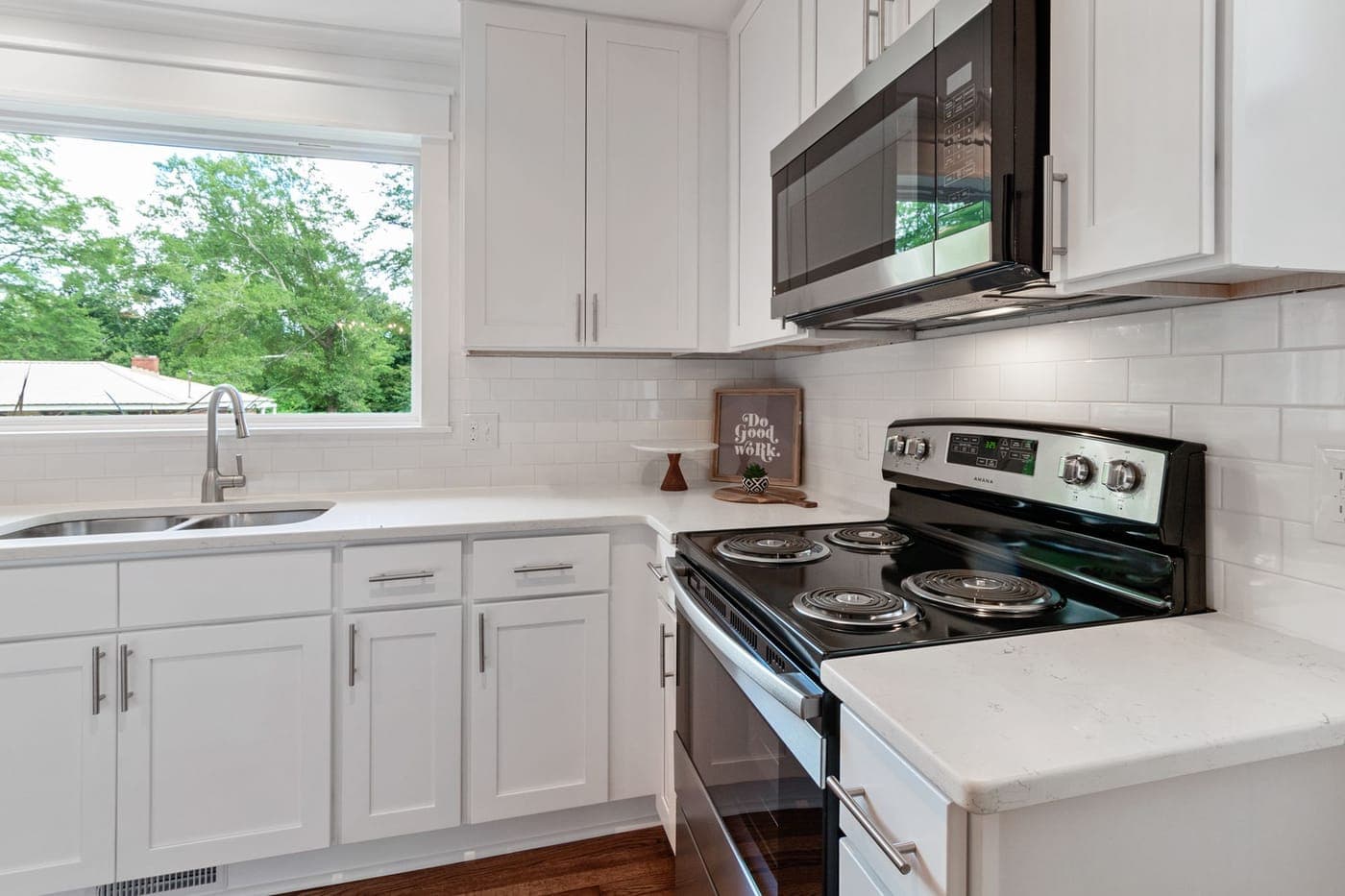
The 4-prong plug on a new appliance will not fit the 3-slot outlets commonly found in older kitchens and laundry rooms. Electric ranges and clothes dryers require a dedicated 240-volt circuit—often referred to as 220 volts—because they draw far more power than a standard wall outlet can handle. A dryer circuit is typically rated for 30 amps, while a range circuit requires 40 or 50 amps; their receptacles are shaped differently to prevent plugging an appliance into the wrong circuit.
The 1996 National Electrical Code updated safety standards to mandate a four-wire system for all new range and dryer installations, introducing a 4-prong configuration that separates the hot, neutral, and ground wires. Prior to this, a three-wire system was permitted, where the neutral wire doubled as the ground connection. While these older 3-prong outlets may legally remain in service, any brand-new installation must use the modern 4-wire standard.
Adding a heavy-duty outlet where one does not exist—such as when switching from gas to electric or induction cooking, or when relocating a laundry room—requires running a completely new circuit from the main electrical panel and verifying that your service can handle the increased electrical load.
What This Covers
- 240-volt outlets for electric and induction ranges
- 4-prong dryer (14-30) and range (14-50) outlets
- Outlets or direct connections for wall ovens and cooktops
- Changing a 3-prong outlet to 4-prong
- New 240-volt circuits from the panel
- Replacing worn, loose or heat-damaged 240-volt outlets
- Moving a range or dryer outlet during a remodel
Signs It’s Time to Call
- Your new dryer or range has a 4-prong plug and the outlet has 3 slots
- You're switching from a gas range or dryer to electric
- The outlet is cracked, scorched or loose, or the plug runs hot
- The laundry or the range is moving in a remodel
- A new appliance needs more amps than the old circuit provides
- A dryer or range has been running on an adapter
The Process
Plug-In or Wired Direct
Many wall ovens and cooktops require direct wiring rather than a plug-in receptacle. The appliance's installation manual and nameplate specify the connection method, along with the required voltage and circuit size.
Count the Conductors
For an existing outlet, inspecting the cable behind it reveals the number, size, and grounding status of the wires. For a new outlet, we verify that the electrical panel has enough available capacity and the two consecutive breaker spaces required for a 240-volt circuit.
Fit the Outlet
We either replace the existing outlet or run a new circuit from the panel to a location specified by the appliance manufacturer, ensuring the unit can sit flush against the wall. Before installation begins, please clear the space in front of the appliance so it can be pulled out safely.
Check Both Hot Legs
Voltage levels on both hot wires, as well as the neutral and ground lines, are thoroughly tested and verified before the appliance is plugged in or energized.
Common Questions
My new dryer has a 4-prong plug and my outlet is 3-prong. What are my options?
Your options depend entirely on the cable behind your existing outlet. If that cable already contains four conductors—including a dedicated ground wire—you can simply swap the old receptacle out for a modern 4-prong outlet. If the cable only has three wires, your safest path is to run a brand-new, four-wire circuit directly from your main electrical panel. Alternatively, the electrical code still allows you to replace the dryer's 4-prong power cord with a 3-prong cord to match the existing wall outlet, provided it is wired exactly as the manufacturer instructs; this compatibility gap is precisely why new dryers are sold without a power cord attached.
What you must never do is install a 4-prong outlet onto an older three-wire cable while leaving the ground terminal empty, nor should you use a plug adapter. Both of these shortcuts leave the appliance's metal chassis completely ungrounded, creating a severe shock hazard.
Is a 3-prong dryer or range outlet unsafe?
It is an older, less secure design, and its primary weakness is that a single wire must serve as both the neutral and the safety ground. If that shared wire ever breaks or comes loose, the entire metal chassis of the appliance can become electrically live. By contrast, a modern four-wire circuit provides the appliance frame with its own dedicated ground line, ensuring that a single wiring failure cannot pass dangerous voltage onto the cabinet.
Does a 240-volt outlet need GFCI protection?
A new or replacement dryer outlet in a laundry area does, normally through a GFCI breaker in the panel. The GFCI (ground-fault circuit interrupter) rule in Georgia's code, the 2023 National Electrical Code with Georgia amendments, now covers 240-volt outlets as well as ordinary ones in laundry areas, garages, basements and outdoors, and within six feet of a sink. A range outlet doesn't need it unless it sits within six feet of the sink.
An existing dryer outlet that was legal when it went in doesn't need it until it's replaced. On a particular job, the permit office for your address has the final say.