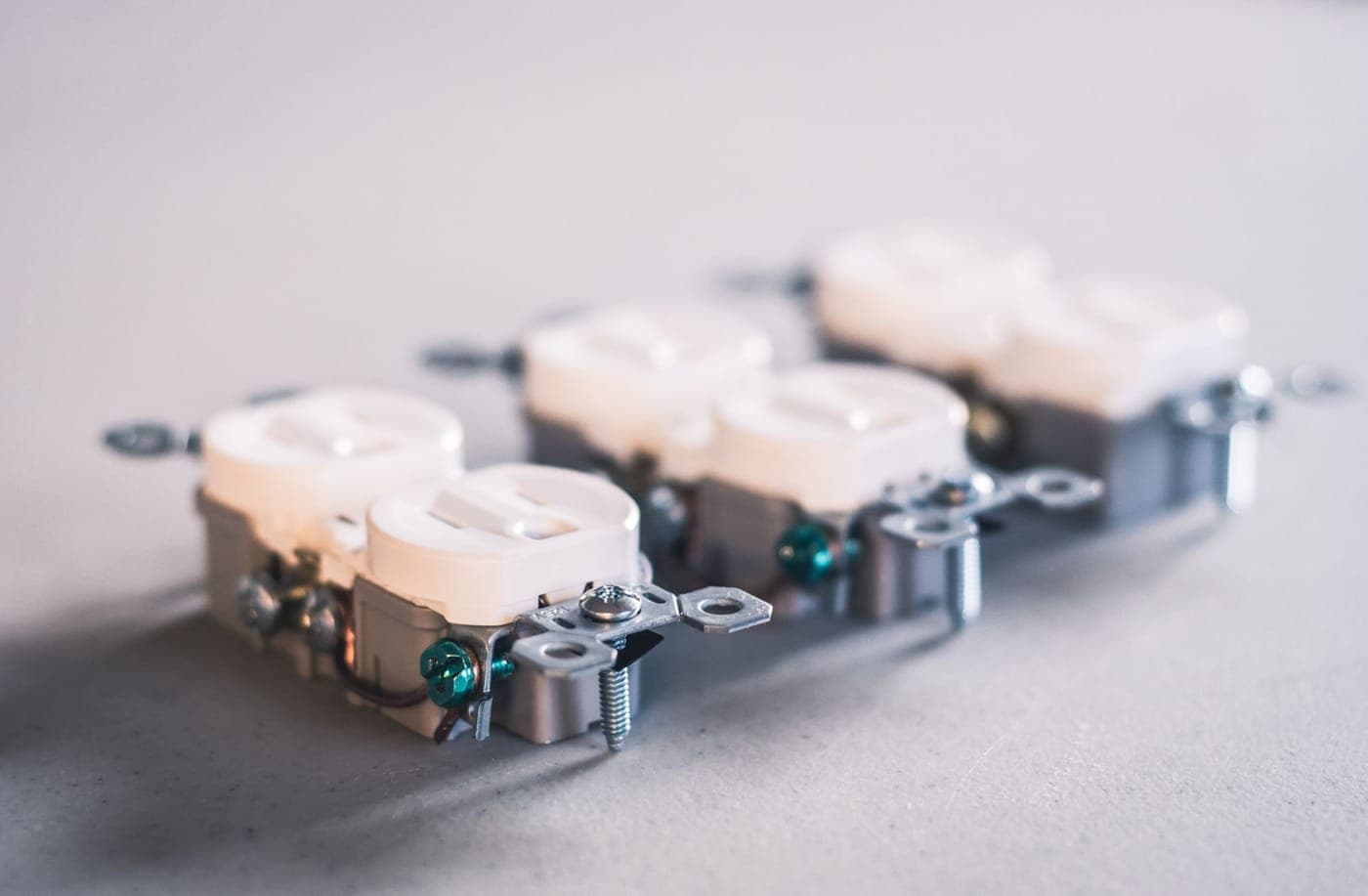
Plugs that fall out or a cover plate that feels warm indicate that an outlet is worn out. Replacing it is a fast process if the underlying wiring is in good condition, whereas adding a brand-new outlet requires identifying a circuit with sufficient capacity and routing a new cable to the location.
Older homes were typically built with far fewer outlets than modern households require, and many are obsolete two-prong models, meaning the job involves both replacing old receptacles and installing new ones. Newer homes generally have an adequate number of outlets, though they may not align with your furniture layout, making floor outlets or units with built-in USB ports ideal solutions to bridge the gap.
Tamper-resistant outlets use spring-loaded shutters that open only when both prongs of a plug are inserted simultaneously. The National Electrical Code has mandated these for new construction since 2008, and nearly all replacement outlets must now be tamper-resistant as well. Additionally, outlets located in bathrooms, along kitchen countertops, in garages, and outdoors require GFCI (ground-fault circuit interrupter) protection.
What This Covers
- Standard 120-volt outlets added where you need them
- Worn, loose, cracked or scorched outlets replaced
- Tamper-resistant outlets
- Outlets with built-in USB-A and USB-C charging ports
- Floor outlets for open rooms, desks and seating areas
- Two-prong outlets replaced with grounded or GFCI-protected ones
- Outlets behind wall-mounted TVs
- An outlet moved to a better height or spot
Signs It’s Time to Call
- Plugs fall out or sit loose in the outlet
- An outlet that's warm, discolored, cracked or buzzing
- Power strips and extension cords in everyday use
- Two-prong outlets, with no hole for a ground pin
- No outlet where the desk, bed or TV needs one
The Process
Start Inside the Box
Before choosing a device, we inspect the box, determine the type and condition of the wire, and verify if a ground is present. Finding aluminum wire or brittle insulation will change the approach.
Find a Circuit and a Route
A new outlet requires a circuit with sufficient remaining capacity and a clear path to run the cable through the wall, attic, or crawl space. If no nearby circuit can handle the extra load, the outlet will need its own dedicated circuit.
Match the Outlet to the Spot
While you choose the color and whether to include USB ports, the specific location dictates the rest: tamper-resistant models throughout the house, GFCI protection near water, weather-resistant units outdoors, and a floor-rated box for any receptacle set into the floor.
Try Each Outlet
We test every outlet to ensure correct wiring, proper grounding, and a secure grip on the plug, while also tripping and resetting each GFCI to confirm the protection works.
Common Questions
Can a two-prong outlet be swapped for a three-prong one?
Not on its own. Two-prong outlets lack an equipment ground—the vital safety path that three-prong appliances and surge protectors depend on. Because of this, using a three-prong adapter or installing a three-prong outlet without connecting a ground wire merely creates an illusion of safety while providing no actual protection.
The electrical code permits three solutions: run a new grounded cable, route a separate ground wire directly to the box, or install a GFCI outlet labeled "No Equipment Ground." While GFCI protection significantly increases personal safety by preventing shocks, it does not actually create a ground connection, meaning sensitive electronics still require a truly grounded circuit.
Can an outlet be added where there isn't one?
It usually can, and the scope of work depends on the location of the nearest suitable circuit, whether it has enough remaining capacity, and the path required to run cable to the new box. When cable can be fished through an attic or crawl space, wall cutting is often limited to the opening for the box itself. However, an outlet intended for a large appliance, a patio, or a shed will typically require its own dedicated new circuit.
What does a floor outlet need?
A specialized electrical box certified for floor use alongside a heavy-duty cover designed for the task, as installing a standard wall box into a floor does not meet electrical code. These outlets are simplest to install over a crawl space or an unfinished basement, where the necessary cable can be easily routed up from underneath.
Will a USB outlet charge a laptop?
It can, provided it features a USB-C port that delivers the specific wattage your laptop requires. While charging speeds vary by model, a USB outlet replaces a standard receptacle and typically preserves both regular plugs; however, because the unit is deeper than a standard outlet, the electrical box must have enough room to accommodate it.