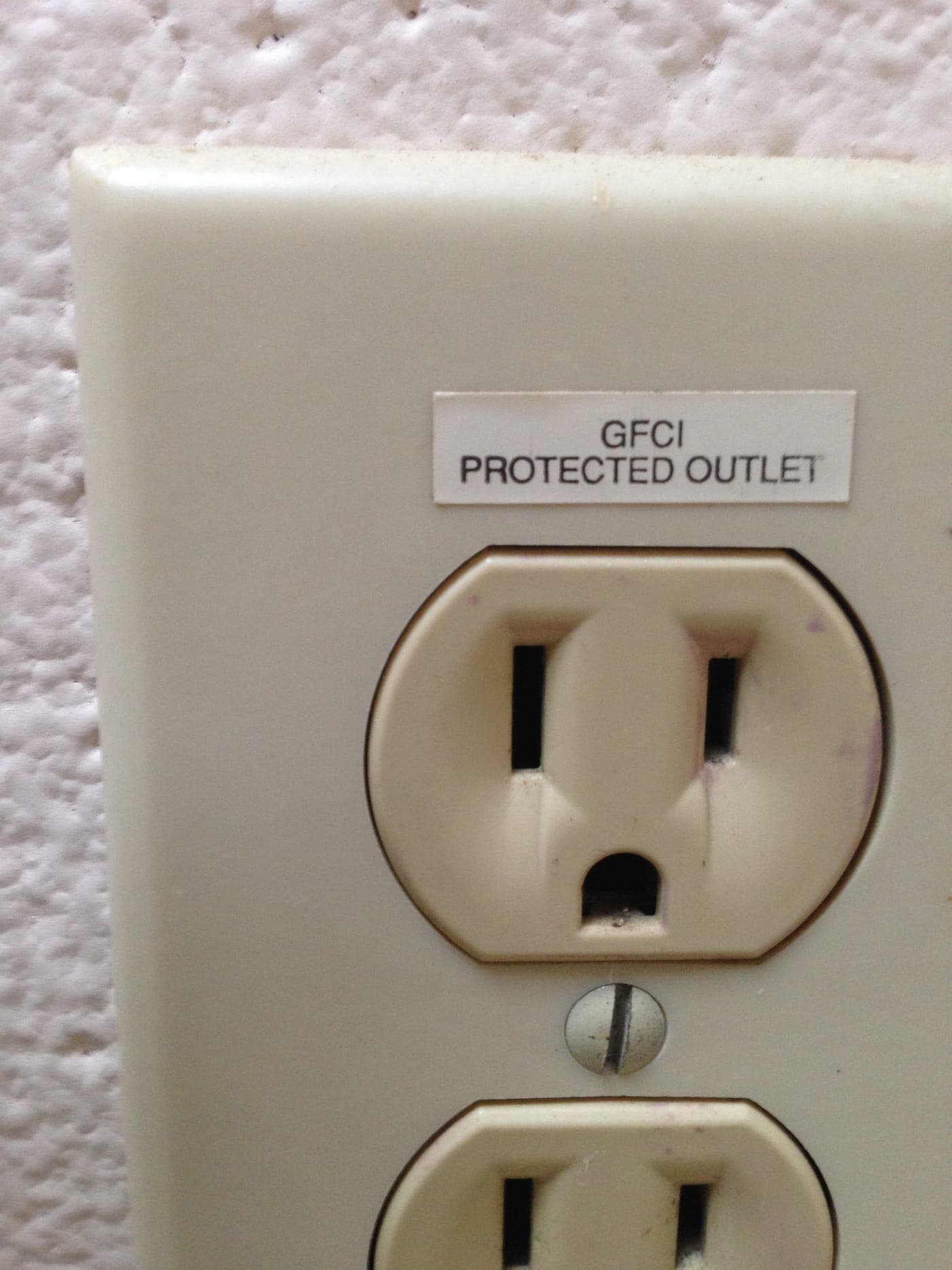
Pressing the "Test" button on a GFCI (Ground-Fault Circuit Interrupter) outlet should instantly cut power, and pressing "Reset" should restore it. If the power stays on during a test, the device is defective and needs immediate replacement. While standard breakers protect your wiring from overloads, a GFCI is engineered specifically to protect people from electrocution. It constantly monitors the balance of electrical current flowing through a circuit, and if it detects even a tiny imbalance—as small as five-thousandths of an amp—it recognizes that electricity is leaking along an unintended path, potentially through a person, and severs the power loop in a fraction of a second.
Because GFCI requirements were integrated into safety codes gradually, your home's protection level depends heavily on when it was built. If your older home still relies on legacy two-prong outlets with no underlying ground wire, the electrical code allows me to install a modern GFCI in its place. While this modification does not create a physical ground wire for sensitive electronics, it actively monitors the line to provide lifesaving shock protection for you and your family.
Choosing how to deploy this safety feature depends entirely on your home's layout. A GFCI outlet protects itself and any standard receptacles wired downstream of it, which is ideal for targeted areas like a bathroom or kitchen counter. Conversely, a GFCI breaker installed in your main electrical panel covers the entire length of the branch circuit from the breaker box onward. Determining the best setup involves analyzing your specific home wiring and considering where you would prefer to go to reset a tripped device.
What This Covers
- GFCI outlets in bathrooms, kitchens, laundry rooms and garages
- Weather-resistant GFCI outlets and covers outdoors
- GFCI breakers that protect a whole circuit
- GFCI protection in basements and crawl spaces
- Replacing GFCIs that won't reset or no longer trip
- GFCI protection for two-prong outlets with no ground
- Dual-function GFCI and AFCI breakers
- Labels showing which outlets each GFCI protects
Signs It’s Time to Call
- Bathroom, kitchen, garage or outdoor outlets show no sign of GFCI protection
- A GFCI won't reset, or trips for no clear reason
- Pressing the test button doesn't cut the power
- An inspection report lists missing GFCI protection
- A bathroom remodel or a new outdoor outlet is planned
- Outlets near water have only two slots, with no ground hole
The Process
Map What's Already Protected
One GFCI often covers several outlets, so I test which ones are protected and which aren't before anything gets replaced.
Choosing Location
The wire, the size of the box and whether there's a ground narrow it down to a GFCI outlet, a GFCI breaker or a dual-function breaker. Where more than one would work, you choose: an outlet resets in the room, a breaker at the panel. Outdoors the device is weather-resistant, under a cover that closes over the plug, and inside the home it's tamper-resistant.
Labeling
Each GFCI is tripped and reset, the outlets it protects are checked, and potentially labeled, while it's off.
Common Questions
Where does Georgia require GFCI protection?
Georgia's statewide electrical code—the 2023 National Electrical Code (NEC) with Georgia amendments—requires GFCI protection on residential outlets in areas exposed to moisture or grounding paths. This includes all outlets in bathrooms, garages, detached sheds, crawl spaces, and basements (whether finished or unfinished). Protection is also mandated for laundry areas, outdoor locations, kitchen countertops, and any outlet sitting within six feet of a sink, bathtub, or shower stall. Notably, these rules cover heavy-duty 240-volt appliance outlets in these areas, and protection is strictly required for dedicated dishwasher and sump pump circuits.
These safety mandates apply to both brand-new electrical installations and everyday replacement work. While you are not legally forced to upgrade every legacy outlet in your home all at once, the law states that the moment an existing outlet in any of these designated high-risk zones is swapped or replaced, the new installation must include code-compliant GFCI protection.
My GFCI keeps tripping. Is it faulty?
Not usually. Most of the time, a tripping GFCI means the device is doing its job correctly. The most common culprits are moisture inside an outdoor or bathroom box, a failing appliance, or a frayed power cord—all of which leak electricity and cause the GFCI to cut power for your safety. To isolate the problem, unplug everything on that circuit, reset the GFCI, and plug your items back in one at a time until it trips again.
However, if the GFCI trips immediately with absolutely nothing plugged into it, or if it refuses to reset at all, the device itself may be worn out or there could be a hidden wiring fault downstream. In those situations, please leave the circuit off and contact me so I can safely diagnose and resolve the issue for you.
Why is an outlet dead when no breaker has tripped?
The most common culprit is a tripped GFCI outlet hidden somewhere else in your home. Because a single GFCI outlet can be wired to protect multiple standard outlets downstream, a tripped device in your garage, basement, or outdoor patio can easily kill the power to an outlet in your kitchen or bathroom. Before calling for service, check all the GFCI outlets throughout your house—especially in wet or damp areas—and firmly press the "Reset" button on any that have popped out.
If your outlet remains completely dead after you have reset every visible GFCI, or if one of those safety devices refuses to reset at all, you likely have a loose wire connection or a hidden fault. At that stage, the circuit needs to be professionally traced and tested, so please reach out and I will safely locate and repair the issue for you.