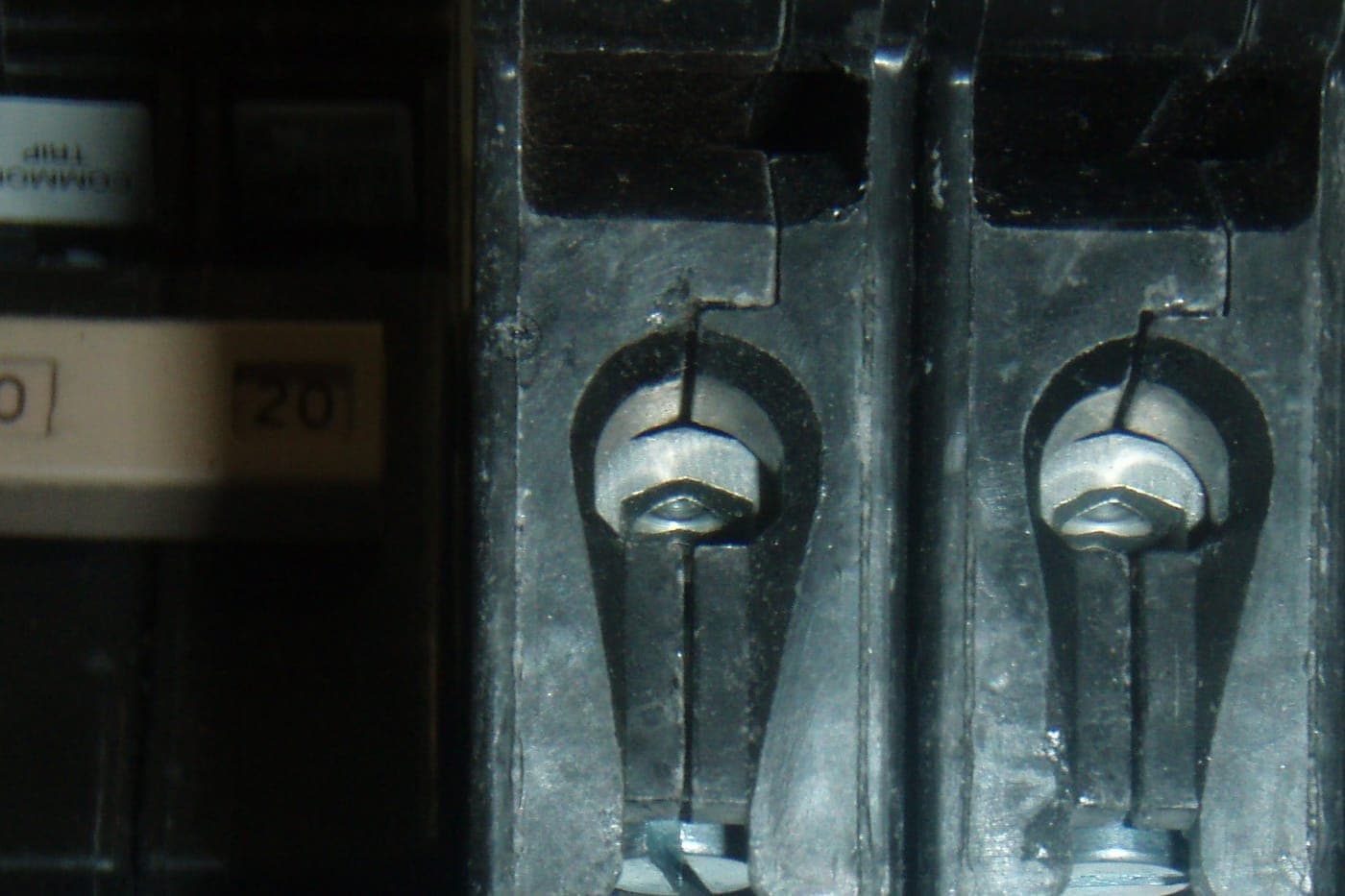
A loose wire connection or a nicked cable inside your wall can cause an electrical arc. Arcing generates intense heat exceeding 10,000°F that can easily ignite a hidden fire without ever drawing enough current to trip a standard circuit breaker. To prevent this, modern AFCI (Arc-Fault Circuit Interrupter) breakers use advanced electronics to detect these hazardous electrical signatures and immediately shut off power to the circuit before a fire can start.
The National Electrical Code first introduced AFCI requirements in 1999 for bedrooms, and the protection list has expanded significantly over the years. Here in Georgia, state code requires AFCI protection on standard 120-volt circuits throughout most living spaces—including bedrooms, living rooms, family rooms, dining rooms, dens, sunrooms, recreation rooms, hallways, and closets. Unlike the national code, Georgia’s local amendments currently exclude kitchens and laundry areas from this list, but if your home was built before these standards took effect, it may completely lack this critical safety layer.
Upgrading older electrical systems requires specialized expertise. AFCI breakers must be specifically engineered to match your unique electrical panel, and many obsolete panels cannot support them at all. Additionally, older homes frequently have "shared neutral" wiring setups that will cause modern safety breakers to trip constantly unless they receive dedicated, expert handling. Where a panel-mounted breaker is not an option, the code allows me to install specialized AFCI receptacles at the very first outlet to safely protect the downstream circuit. For areas that demand both fire and shock protection, I install dual-function breakers that seamlessly combine AFCI technology with GFCI shock defense.
What This Covers
- AFCI breakers on bedroom and living-area circuits
- Dual-function AFCI and GFCI breakers
- AFCI protection for circuits being extended or remodeled
- AFCI receptacles where the panel can't take an AFCI breaker
- Tracing the cause when an AFCI keeps tripping
- Replacing AFCI breakers that have failed
Signs It’s Time to Call
- The house was built before AFCIs were required and has none
- A remodel will add outlets or extend a circuit
- An inspection report lists missing arc-fault protection
- An AFCI breaker trips and you can't tell why
- The wiring is old and you want another layer of protection
The Process
Panel Make and Model
I note the panel's make and age, which AFCI breakers are made for it, and how each circuit is wired, including any shared neutrals.
Breaker, Receptacle, or Dual-Function
Circuit by circuit, the choice is an AFCI breaker, an AFCI receptacle or a dual-function breaker. If the panel is obsolete or full, replacement is another option.
When a New AFCI Trips
An AFCI that trips as soon as it's switched on is often reporting a real wiring fault that a standard breaker never noticed. We find and repair the fault, and the added protection stays.
Marked in the Directory
Each AFCI is tripped with its test button and reset. The panel directory shows which circuits now have arc-fault protection.
Common Questions
What is the difference between AFCI and GFCI?
An AFCI protects the house from fire, and a GFCI protects people from shock. The AFCI watches for the electrical signature of arcing in a damaged cord, a pinched cable or a loose connection. The GFCI shuts off when current leaks to ground, through water, say, or through you.
Bedrooms and living areas call for AFCI, while bathrooms, garages and outdoor outlets call for GFCI, and a dual-function breaker gives one circuit both forms of protection.
When does an older house need AFCI protection?
Once a circuit serving a bedroom, a living area, or another room on Georgia's list is extended, modified or replaced. At that point the 2023 National Electrical Code with Georgia amendments calls for AFCI protection on it, unless the work is an extension of six feet or less that adds no outlets. Until then, wiring that met the code when it went in is generally grandfathered in.
Adding AFCIs before then, by choice, is a sensible upgrade. It protects old wiring rather than repairing it. However, it doesn't catch every kind of fault, so a problem like aluminum wiring will still need its own fix.
What makes an AFCI breaker trip?
Arcing is the most common cause: a loose connection at an outlet, a cable nicked by a nail or a staple, a failing cord. The way the circuit is wired is another: such as a neutral shared with another circuit, and some appliances with motors can trip one too.
Unplug whatever was running when it tripped. If the breaker keeps tripping, leave it off and have the circuit traced. Swapping it for a standard breaker only hides the warning.