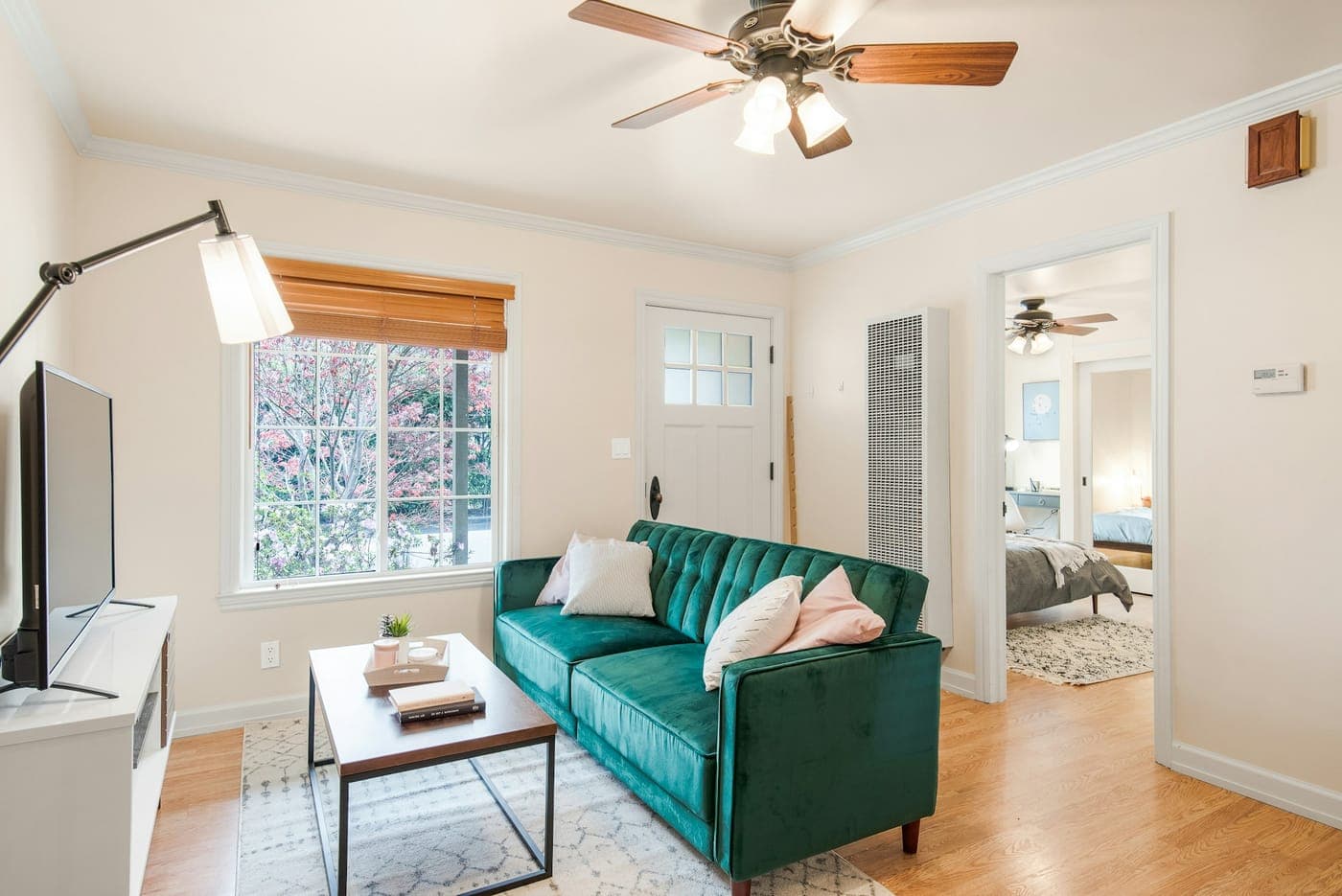
Installing a ceiling fan where a light fixture currently sits usually requires changing the electrical box as well. The box must be explicitly listed and marked for fan support; a standard light fixture box is not rated for the dynamic load, even though a fan will physically attach to it. Consequently, the old box must come out so a fan-rated box or a bracing system between the joists can go in.
A room lacking any ceiling fixture can still accommodate a fan by running a new cable from a wall switch. If two switched wires are routed to the ceiling box, the fan motor and its light kit can each be operated by their own independent wall switches.
When installed on a porch, the fan must be rated for damp or wet locations. Indoors, the cooling effect of the moving air allows you to set your thermostat about four degrees higher in the summer while remaining just as comfortable.
What This Covers
- Replacing an existing fan with a new one
- Replacing a light fixture with a fan
- Installing a fan where there's no fixture
- Fan-rated boxes and bracing between joists
- Remote receiver modules and wall controls
- Fans on vaulted ceilings, high ceilings and porches
- Fixing fans that wobble, hum or have stopped working
Signs It’s Time to Call
- A room feels stuffy even with the air conditioning on
- A fan wobbles, clicks or hums
- The light works but the fan doesn't, or the other way around
- The remote has stopped working or gone missing
- A fan was hung on a box meant for a light fixture
The Process
Take Down the Old Fixture
The light or old fan is removed so we can inspect the electrical box for a fan-support rating and determine how many switched wires reach the location.
Choose Wall Switches or a Remote
If two switched wires are present, the fan and its light can each be operated by an independent wall switch. If only one wire is available, you can select a handheld remote or a wireless wall controller that signals a receiver tucked inside the fan canopy.
Brace the Ceiling
If the existing box is inadequate, a fan-rated box or an adjustable bracing bar is secured directly to the ceiling framing, typically installed right through the current opening without additional drywall cutting.
Hang, Wire and Balance
We hang the fan using the appropriate downrod or flush mount for your ceiling height, wire it securely to its designated controls, and operate it at every speed setting to eliminate any wobble.
Common Questions
Can a ceiling fan go where a light fixture is now?
Yes, and the necessary wiring is usually already in place. However, the electrical box itself often must be replaced because a fan is both heavier than a light fixture and creates dynamic motion. A fan weighing over 35 pounds requires a box explicitly marked for that weight, while any unit exceeding 70 pounds requires a specialized support system connected directly to the building's structure.
What does a remote receiver do, and do I need one?
A receiver is a small electronic module tucked inside the canopy—the decorative cover where the fan meets the ceiling. It sits directly between your home's wiring and the fan itself, intercepting signals from a handheld or wall-mounted remote to control the fan speed and the light independently. It is the most common solution when you only have a single switched wire running to the ceiling but still want separate controls for the fan and the light kit.
Many modern fans come with a receiver built-in, and an aftermarket receiver can be added to most older pull-chain fans as long as there is enough physical room inside the canopy. Furthermore, if an existing receiver fails, it can usually be replaced on its own without needing to replace the entire ceiling fan.
How high should a ceiling fan hang?
The fan blades must sit at least seven feet above the floor and maintain a distance of at least 18 inches from the nearest wall. Whenever your ceiling height permits, keeping the blades eight to nine feet above the floor will deliver the most efficient airflow. For tall or sloped ceilings, a longer downrod or a specialized angled mounting bracket will be required to achieve the proper height.