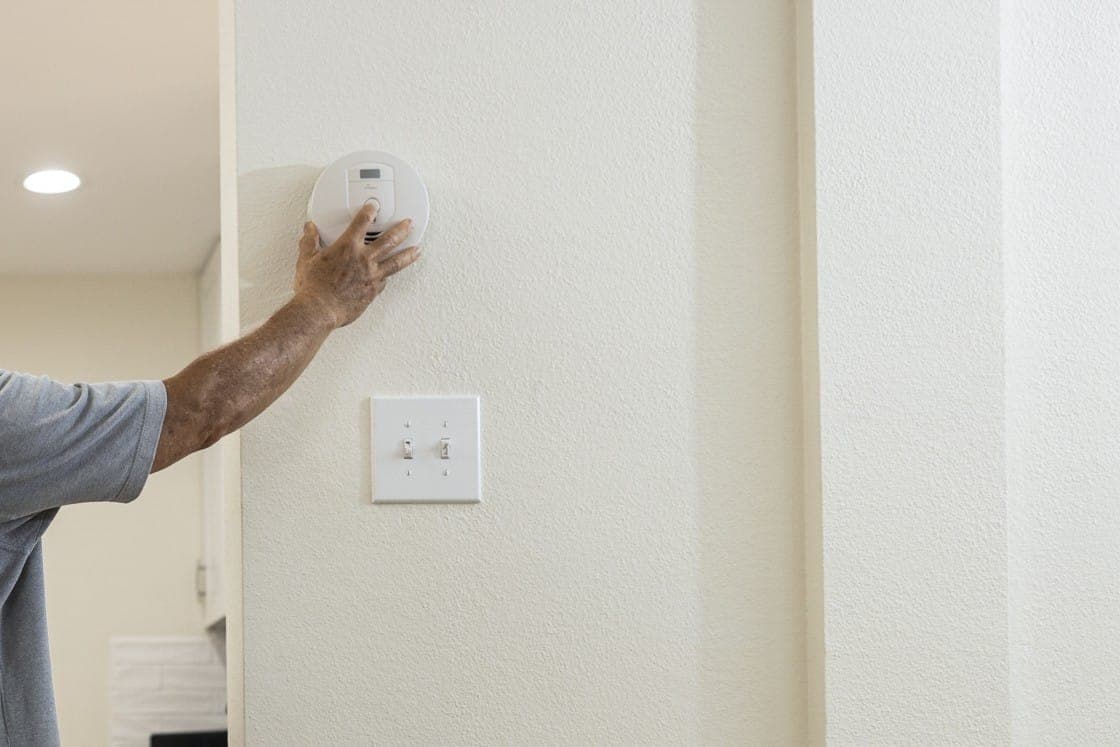
Smoke alarms have a working life of about ten years, after which the sensor becomes unreliable even if the test button still functions. Removing the unit from the wall reveals its manufacture date printed clearly on the back.
Hardwired smoke detectors operate on household electrical power and feature a battery backup to ensure continuous protection during an outage. They are also interconnected, meaning that when one alarm is triggered, every unit throughout the house sounds simultaneously. The National Fire Protection Association recommends installing a smoke alarm inside every bedroom, directly outside each sleeping area, and on every level of the home—including the basement.
Carbon monoxide (CO) alarms must be installed outside each sleeping area and on every story. Homes equipped with gas appliances, a fireplace, or an attached garage have the greatest need for this protection, and Georgia's residential code mandates them in all newly constructed homes. Conversely, older houses were frequently built with only a single alarm in the main hallway, or completely lacked them altogether.
What This Covers
- Replacing expired hardwired smoke alarms
- Adding hardwired alarms in bedrooms and on each level
- Interconnecting alarms so they all sound together
- Carbon monoxide and combination alarms
- Converting battery-only locations to hardwired with battery backup
- Tracking down alarms that chirp or false alarm
Signs It’s Time to Call
- An alarm is more than ten years old, or has no date on it
- An alarm chirps even with a fresh battery
- There's no alarm inside the bedrooms
- You have gas appliances or an attached garage and no CO alarm
- One alarm going off doesn't set off the others
- An addition or remodel is going in under a permit
The Process
Date Every Alarm
Each alarm is taken down long enough to inspect its manufacture date and technology type, and we identify any bedrooms, hallways, or home levels that lack a fixture under current safety guidelines.
Replace Them as a Set
Because alarms sharing an interconnected network must be fully compatible, they are normally replaced together as a complete set. Every brand-new hardwired location receives household line power along with a dedicated interconnect wire routed to the other units.
Set One Off
We test the individual operation of each unit, then hold down the test button on a single alarm to confirm that every other interconnected detector throughout the house sounds simultaneously alongside it.
Common Questions
How often should smoke detectors be replaced?
Every ten years from the date of manufacture, which is printed on the back of the alarm. Carbon monoxide alarms have a lifespan of their own, set by the manufacturer, so go by the replacement date or the instructions on the alarm, and most will signal when they've reached it.
In between, test your alarms monthly with the test button.
Why does my smoke alarm keep chirping?
A single chirp every 30 to 60 seconds usually means the backup battery is low. If a fresh battery doesn't stop it, the alarm may be past its working life, or dust has gotten into the sensor. Check the date on the back first, and if it's more than ten years old, replace the alarm.
Are hardwired smoke alarms better than battery ones?
Hardwired, interconnected alarms with battery backup are the standard for new homes. They don't depend on anyone remembering a battery, and every alarm sounds at once. A remodel or addition that needs a permit is generally the point where the building code expects alarms in every spot a new home would have them.
Where running cable isn't practical, sealed ten-year battery alarms are a reasonable option, and some models interconnect wirelessly.